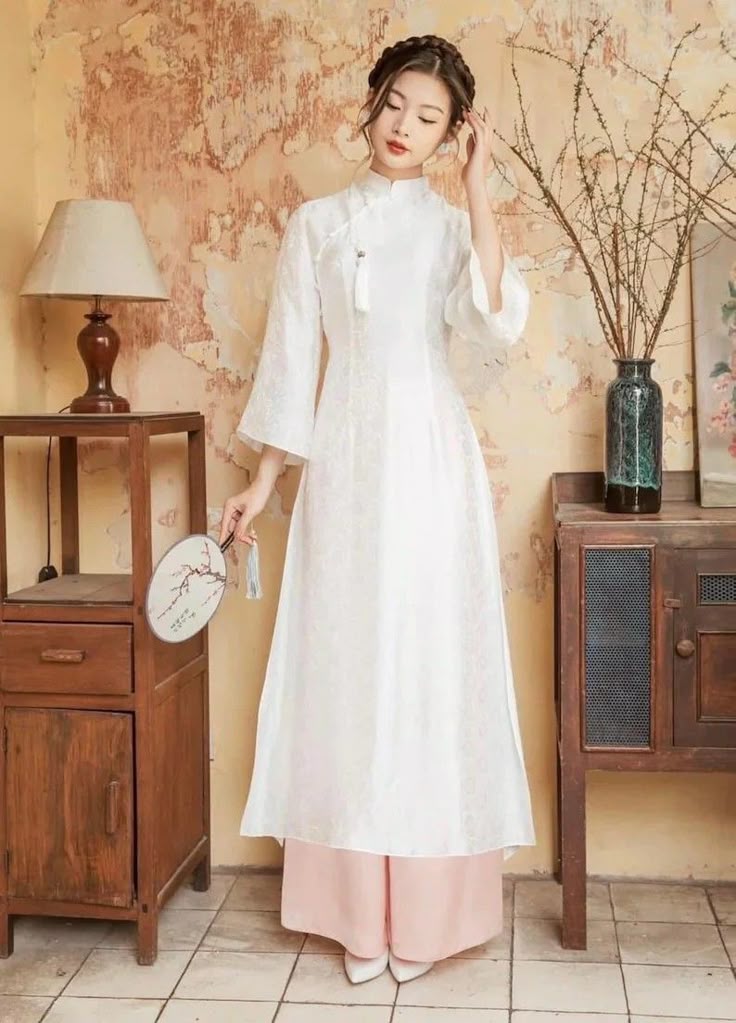
Asian dresses are like beautiful storybooks you can wear. Every stitch and every fold tells a secret about the past. When people wear these historical garments, they are showing their cultural heritage to the world. These clothes are not just for looking pretty. They help us remember where we came from.
In many parts of Asia, the way a dress is made depends on the land. People used what they found around them to make traditional clothing. By looking at these outfits, we can see how people lived hundreds of years ago. It is a way of heritage preservation that keeps old stories alive today.
Traditional Fabrics and Materials in Traditional Asian Clothing Female
Women in Asia have used special materials for a very long time. One of the most famous is silk. Silk comes from tiny cocoons made by worms! These fabric traditions are very old. In many places, women also used cotton or linen to stay cool in the heat.
The materials chosen are part of ethnic fashion. If a dress is made of shiny silk, it might be for a ceremonial dress like a wedding. If it is made of sturdy cotton, it might be for working in the fields. These fabrics show us what the weather was like and what resources people had in their homes.
Cultural Symbolism in Patterns and Colors of the Best Asian Traditional Dress
Colors and patterns have special meanings in Asia. This is called symbolism in clothing. For example, in many cultures, the color red means good luck and happiness. You might see a bride wearing red to have a happy life. Gold often means wealth or royalty.
Patterns also tell stories. You might see a dragon, which means strength, or a lotus flower, which means purity. This embroidery meaning is a form of cultural expression. It is like a secret code. If you know what the pictures mean, you can understand what the person wants to tell the world about their cultural identity.
Historical Evolution of Ancient Chinese Clothing Female
In Ancient China, women’s clothes changed a lot over time. This is called dynastic fashion. Long ago, in the Han Dynasty, clothes were very loose with big sleeves. Later, in the Tang Dynasty, they became more colorful and fancy.
Each time a new king or queen ruled, the regional dress styles would change. These historical garments show us how the rules for women changed too. Sometimes the clothes were very strict, and sometimes they were more free. This history is saved in the silk and thread of these old dresses.
Style and Identity in Chinese Traditional Dress Male
Men’s clothing in China also shows who they are. For a long time, the way a man dressed showed his job or how important he was. This is part of their cultural identity. A scholar might wear a long, plain robe to show he is smart and quiet.
The textile history of male clothing is very interesting. Men often wore belts and hats that had special meanings. These styles helped people know who was a soldier, a teacher, or a leader. It was a clear way of showing cultural expression through simple outfits.
Timeline and Development of Traditional Chinese Clothing Male History
The history of male clothing in China is very long. It started with simple wraps made of animal skins or hemp. As time went on, people learned to make better fabrics. During different dynasties, the dress codes in Asia became very important.
Kings made rules about what colors men could wear. Only the Emperor could wear yellow! This timeline shows how the country grew and changed. From the simple robes of the past to the fancy silk suits later on, every change happened for a reason.
Heritage Reflected in Ancient Chinese Clothing Male
When we look at ancient clothes for men, we see their cultural heritage. The designs were often based on balance and nature. They believed that clothes should match the world around them. This is a big part of heritage preservation.
Many men’s outfits featured tall collars and buttons made of knots. These details are part of ethnic fashion. Even today, men wear these styles to show they are proud of their history. It connects the young people of today to their grandfathers from a long time ago.
Regional Identity in Chinese Dress Traditional
China is a very big place with many different groups of people. Each area has its own regional dress styles. People in the cold north wear thick, heavy robes. People in the warm south wear light, thin clothes.
This variety is what makes Asian dresses so special. Each region uses different colors and embroidery meaning to show where they live. By looking at someone’s clothes, you could tell if they lived near the mountains or near the sea. It shows how proud they are of their own home.
Cultural Significance of the Qipao Dress
The Qipao is a very famous dress from China. It started as a loose outfit for many people, but it changed over time to be more fitted. It is a great example of traditional clothing that people still love today.
The Qipao is often worn as a ceremonial dress for parties or holidays. It represents the beauty and strength of Chinese culture. When a woman wears a Qipao, she is celebrating her textile history and showing the world her beautiful Asian dresses. It is a bridge between the old world and the new world.