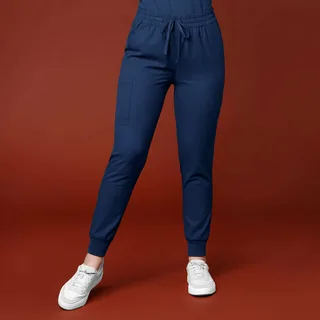
Hospital hallways are walked for miles, patients are bent over to examine, and emergencies are rushed to by healthcare personnel who stand for up to 12 hours every day. Conventional scrub pants, which are frequently loose, baggy, and made of inflexible fabrics, can impede movement and induce weariness. Enter healthcare joggers. These modern uniform pants merge the airy, soft fabric of medical scrubs with the athletic style and elasticated cuffs of jogging trousers. The outcome is a tight, professional-looking garment that flexes with the wearer’s movements. Workplace comfort has a direct impact on concentration, physical well-being, and patient care for allied health professionals, physicians, and nurses. When uniform uneasiness distracts, the risk of errors increases. Finding high-quality Jogger Scrub Pants UK alternatives is essential for those who desire smarter workwear because they provide both style and utility.
No restricting, cumbersome fabric
Wide legs on conventional scrubs frequently snag on bed rails, trolleys, and other equipment. When kneeling, they tend to cluster around the knees as well. The leg of healthcare joggers narrows at the ankle and is held in place by an elastic or ribbed cuff. This design keeps the cloth near the body without being snug. The trousers move with you when you squat to inspect a patient’s wound, bend to plug in a monitor, or climb onto a step stool. There is no additional material to catch or trip on. Additionally, the jogger cut creates a neater form under a tunic or white coat. Joggers provide a complete range of motion (lunges, squats, stretches) for physical therapists and occupational therapists who perform exercises. Avoiding awkward drops and lessening physical fatigue are made possible with freedom of movement.
Place Pockets Safely for Essentials.
Pens, scissors, tape, notepads, smartphones, hand sanitiser, and lip balm are among the many tiny items that healthcare personnel transport. Usually large and slack, the pockets on traditional scrubs let the contents move around, knock against the thighs, or slip out when you sit down. The pockets on the jogger scrub pants are positioned intentionally. On the outside of the thighs, things are held firmly near the body by cargo-style pockets. Avoid losing items by using Velcro or zippers. Some designs include internal compartments for phones, keeping gadgets clean and secure. Additionally, the jogger suit’s lack of bagginess means that items in the pocket don’t move as much. Without a pen slipping out, a nurse may bend down to tie a patient’s shoelace. This efficiency minimises the annoyance of searching for lost goods.
Elasticised Waistbands for Extended Work Hours
During shifts, conventional scrubs frequently have drawstring waists that may loosen, twist, or dig in. It is irritating and unprofessional to continually adjust. Wide, smooth elastic waistbands on healthcare joggers hold them in place without being tight. Although some feature internal drawstrings for fine-tuning, the elastic handles the majority of the work. Depending on taste, the waistband is designed to lie at or just below the natural waist. When sitting or digging into the stomach after eating, it does not roll down. Adaptive comfort is offered by elastic for workers who acquire or lose water weight during shifts (which is typical in hot operating rooms). A comfortable waistband allows you to concentrate on patients rather than worry about your pants falling.
Fabrics that breathe and wick moisture away.
Stuffy wards and freezing air conditioning alternate in hospitals. Conventional cotton scrubs soak up sweat and become heavy and cold. Performance textiles, such as polyester-spandex combinations, bamboo rayon, or specific wicking knits, are often worn by medical joggers. These materials draw moisture from the skin and spread it over the fabric surface, where it quickly evaporates. This maintains temperature control and keeps you dry. Moisture-wicking is important for employees who work in hot areas (such as physical therapy, delivery rooms, and kitchens) or wear plastic gowns over their uniforms. Additionally, dry skin lessens the possibility of heat rash and fungal infections. After hours of hustle, breathable materials keep you from having that clammy sensation by letting air flow. It’s not just about the fit; it’s also about how the fabric feels against your skin.
Conclusion
Healthcare joggers improve workplace comfort by allowing free movement, having secure pockets, elasticated waistbands, breathable fabrics, fewer tripping risks, a professional appearance, warmth without bulk, and robust construction. The eight points mentioned above show that uniform design has a direct impact on physical well-being, concentration, and safety. You will move more effectively, think more clearly, and treat patients more compassionately when you are at ease. A pair of pants that fits well is important. Experience the difference from the moment you set foot on the ward by improving your attire.